By Dr Conor Heffernan, Ulster University
When is it appropriate to criticise, even mock, someone with a medical condition? Is there a point at which we can insult an individual, or even a group, enough for them to overcome their condition? Better yet, can we shame those around them for ‘allowing’ this to happen? What if we, as a society, used unflattering images of them as a ‘warning’ for the public not to let them too, succumb to the condition?

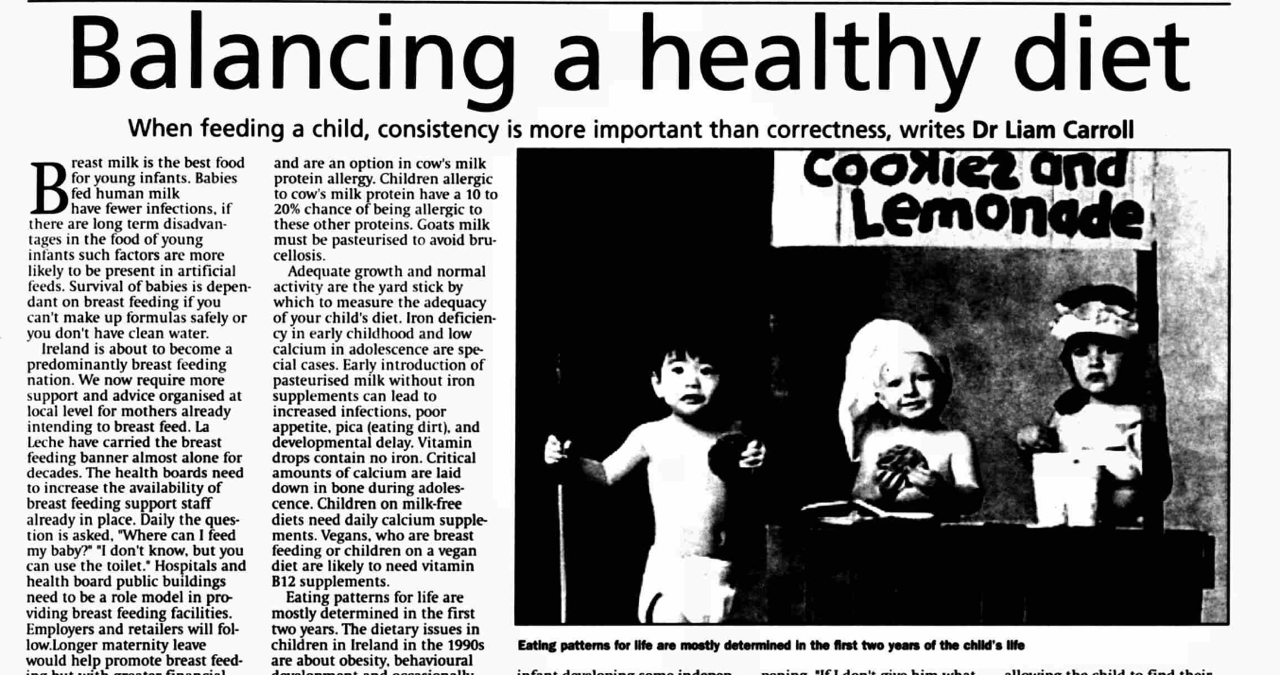
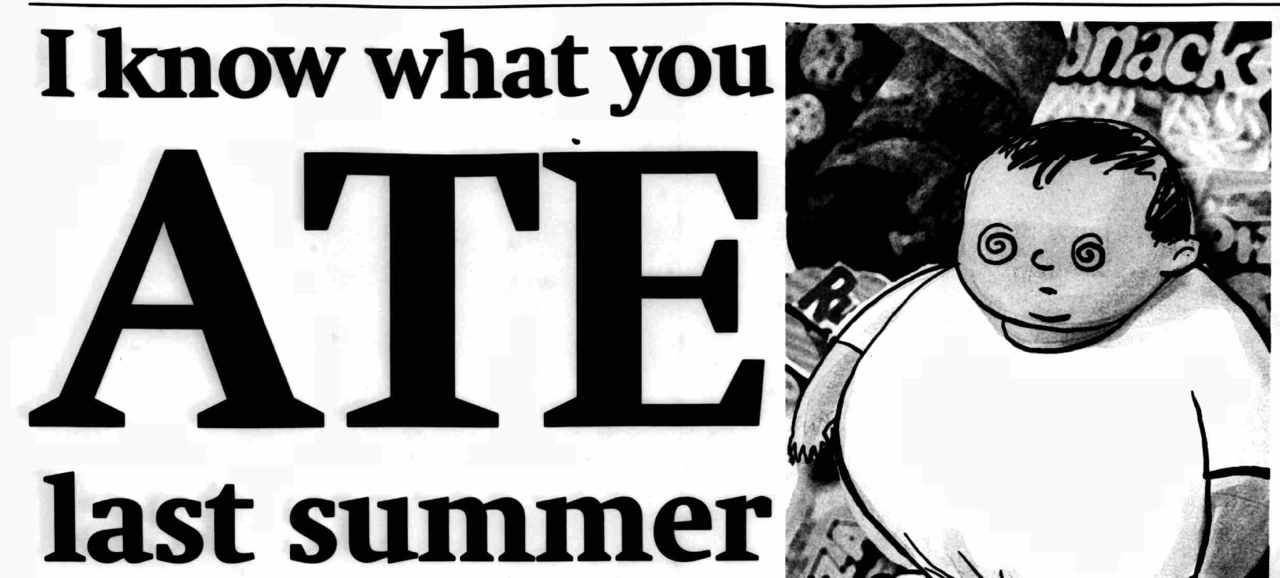
Such questions are, quite frankly, abhorrent, but they fuel a great deal of discourse concerning people with obesity or those classed as overweight. Those in larger bodies have long been seen as lazy, gluttonous, uneducated and worthy of criticism in Western society. Indeed, George Vigarello’s excellent work on obesity, as well as Sander Gilman’s research, have traced the changing symbolism of large bodies across millennia.[1] To provide a brief synopsis larger bodies were once deemed to be a symbol of health and material wealth but, during the course of the nineteenth century, in particular, came to be vilified in both health and popular circles. Ireland was not immune from this process and, in line with the Anglophone world in particular, ‘discovered’ an obesity epidemic during the late 1990s.[2] Before examining this in further detail it is worth clearing things up somewhat. Here overweight is treated as a body mass index (BMI) score of 25 to 29.9 kg/m2 and obesity as a BMI of ≥30 kg/m2. The BMI, itself a creation of the nineteenth-century, measures health outcomes by comparing one’s weight to their height and, itself, is subject to a great deal of criticism.[3] Nevertheless, it was, and remains, to be the metric used to track obesity across countries.
We are left with a scientific observation and a social response. During the 1990s the number of children and adults classed as overweight or obese, as per the BMI, was increasing. This was tracked by both Irish researchers and those working on global studies of obesity. It would be wrong then, to classify the obesity discourses of the 1990s as a ‘moral panic’ because a cited and verifiable phenomenon existed.[4] What interests us here is not the underlying issues concerning health inequalities, food advertising and food processes which fueled the obesity epidemic but rather the general public’s response.
The Irish media, in particular, took an almost gleeful approach in criticising parents for raising ‘fat’ children, for people taking the ‘easy’ option with food choices and for mothers, in particular, for failing to cook healthy meals for the family. Such discourses reinforced a very simple idea which still pervades to this day – fatness is an individual problem, if not outright failing on the part of the individual. This is not a uniquely Irish story, although it does have distinct undertones, but it is an important one given the ongoing failure exhibited by many in the Irish media, and indeed health profession, in treating those living with obesity with respect.[5]
Here we will briefly outline the scientific and economic context of the obesity problem in Ireland before looking at both measured and inflammatory media responses. In all, it will become clear that debates surrounding childhood obesity put an undue onus on the individual, thus skewing ideas about addressing the problem.
Discovering Obesity
When was the last time we were not obese? It is an interesting question and one answered, briefly, in Benjamin Caballero’s global study of obesity. As per Caballero, the late nineteenth century marked the last period in which the West struggled with a lack of calories, rather than a surplus.[6] Within the United States, insurance companies began to take height and weight measurements seriously from the 1930s.[7] From there it is possible to outline a growing American, and later global, fascination with obesity. While the public health official in the 1960s concerned themselves with heart health, those a decade later were beginning to worry obesity and later obesity related issues (type two diabetes, high blood pressure, high LDL cholesterol etc…).[8]
Within an Irish context, it was not until the 1990s that scientific studies on obesity began to be released. Prior to this point, heart disease was a larger public health concern and, indeed, it is important to note that many public health initiatives in the late 1980s focused on this very issue. One of the first studies on obesity was conducted by Shelly and colleagues and focused on a small subset of adult men and women from Kilkenny, studied first in 1985.[9] They found that while 50% of men and 44% of women studied were overweight, 13% of men and 19% of this population had moved into an obese category. Nevertheless their findings that a significant number of Irish adults could be classified as overweight or obese were replicated elsewhere.[10]
Globally the 1990s was a time when the definition obesogenic became more prevalent. This referring to the multitude of individual and environmental factors which lead to heavier body weights. This Irish studies, such as that of Moira Hurson and Claire Corish, studied not just bodyweight but broader issues related to diet and, in time, exercise patterns.[11] Their conclusion that ‘changes from present day practices would be beneficial to reduce incidence of chronic disease for present day teenagers’ seemed simultaneously quaint and neutral in tone. This was not replicated when it came to public discourses, a point soon discussed.
The critical point to this issue was that it was presented as both an Irish and as a global problem. Scientists and commentators could point blame at singularly Irish problems concerning diet and food cultures but contrast them with the international environment itself. This led to some serious oversights in public reporting on the problem where in international trends and factors were often presented as illustrative of the Irish case.
Our Kids are a Nation of Fatties
The past decade has, painfully, made clear the importance of scientific communication.[12] How information is presented to the general public is just as important as the research findings. This is especially the case in matters dealing with public health where misunderstandings or misinformation can lead to poor health outcomes. An obvious, and well documented example of this relates to vaccine hesitancy in several high profile examples from the past century.
When it comes to obesity, scientific communication is likewise critically important as weight loss, and indeed weight gain, is a deceptive topic in public discourse. In this context, deceptive is taken to mean a complex topic that is often taken to have simple solutions. In line with the broader societal trends outlined in Vigarellos work on obesity, a great deal of public discourse in Ireland during the 1990s, especially in the Irish press, presented obesity as an individual problem and an individual failure. In effect, advice was centred on ‘eat less, move more.’[13]
Set against the backdrop of rising economic opportunities, the 1990s was a period of excess for some within the Republic. The grandiosely titled Celtic Tiger had increased both the nations GDP and individual consumption habits. Within this context, the disease of obesity – taken by many at this time to be a disease of excess – became a lightning rod for self-moralising.[14]
Examining popular reports from this period highlights three key themes repeated ad nauseum by reporters and many public figures. First that laziness and individual slothfulness was to blame, second that people refused to eat healthy foods and third that Irish mothers, in particular, were to blame for not providing nutritious foods to spouses and children. Perhaps unsurprisingly a great deal of attention focused on children given their health was reflective of the nations future.
Television, video games and slothfulness was the first point of concern for many journalists. Television, in this regard, was the main culprit. Images in The Irish Independent showed a family sitting in the warm glow of a television set as the title ‘survival of the fattest’ made clear the folly of their activity.[15] Emma Haughton lamented that children ‘don’t walk to school… don’t play games and their favorite occupation is TV.’[16] Others took a more direct approach as made clear in the use of dehumanizing words such as ‘fatties’, ‘couch potato’, ‘lumps’ and so on.[17]
Dietary and lifestyle changes were to blame. So too though, were Irish mothers. Specifically they were to blame for pandering, rather than parenting, their children. Children were now overweight because they were ‘fuzzy’ and ‘picky’ eaters. They refused healthy foods in favour of new sugary flabours and, because of this, their health deteriorated. Compounding matters was the fact that many mothers no longer provided home cooked meals for their children. Take, for example, June Edwards’anecdote about mother ‘Liz’ who simply gave up trying to force healthy foods on her child Aoife. ‘Brown bread and apples’ were fine in theory but the mother hand relented in the face of opposition.[18]
There was also, in this, a reaction towards a generation of children emboldened and, certainly fattened, by Celtic Tiger Ireland. They had more access to resources and were being supported financially by parents in ways inconceivable for the vast majority only a decade before. It is important to stress here that few, if any, of these reports utilised scientific literature or findings in any substantive way outside of noting a growth in obesity numbers.[19]
Finally, of course, there was the issue of food, specifically sugar in the diet. A specific bugbear for many scientists, journalists and public health officials was the emergence of sport drinks as a new consumer product. Marketed as healthy, and certainly something for athletes, such drinks were seen as Trojan horses for unhealthy and poor diets. While sweets and crisps were equally vilified, it was the sport drink which bore the brunt of a great deal of public ire.[20] Innovations in food production, and indeed marketing, were thrown together with other observations about modern life to create a seemingly insurmountable charge against health.
What was Ignored?
At the time of writing, weight loss and appetite suppressant drugs are drawing a great deal of ire towards those taking these drugs. Common narratives include claims that those living with obesity are ‘taking the easy way out’, are ‘ignoring good’ dietary behaviors and are just ‘lazy.’ The puritanical undertones suggest that little has changed from the 1990s when media attention towards obese bodies increased in both focus and frenzy.
Academically, the past two decades have shown a great deal of sympathetic research on the environmental and economic conditions that seem to encourage obesity in certain populations, including limited access to perishable food, economic deprivation, architecture inhospitable to health practices, etc. Such discourses were, of course, absent in the journalistic writings of the 1990s.
Why does this matter? Research in history, sociology, psychology and public health has made clear that obesity has often been depicted as an individual failure or problem.[21] The targeting and puritanical zeal many in popular culture have taken towards discussing those living with obesity has contributed to a general acceptance of fatphobia which has not improved either the mental or physical health of those with obesity. Studying the origins of public debates surrounding obesity in Ireland helps to understand, in part, both the emotions often attached to this topic and, more critically, the stagnancy in health debates concerning interventions. Put differently, and much more bluntly, when journalists and public figures first began discussing obesity they tended to blame the individual. This laid, in part, a script which many in Ireland have continued to follow.
[1] Georges Vigarello, The Metamorphoses of Fat: A History of Obesity (Columbia University Press, 2013); Sander L. Gilman, Fat: A Cultural History of Obesity (Polity, 2008).
[2] W. Philip T. James, “WHO Recognition of the Global Obesity Epidemic.” International Journal of Obesity 32, no. 7 (2008): S120-S126.
[3] Isabel Fletcher,. “Defining an Epidemic: The Body Mass Index in British and US obesity Research 1960–2000.” Sociology of Health & Illness 36, no. 3 (2014): 338-353.
[4] A useful introduction to moral panic theory being Chas Critcher, “Moral Panic Analysis: Past, Present and Future.” Sociology Compass 2, no. 4 (2008): 1127-1144.
[5] Again the field of fat studies has made very clear the global issues surrounding discourses around larger bodies. Charlotte Cooper, “Fat Studies: Mapping the Field.” Sociology Compass 4, no. 12 (2010): 1020-1034.
[6] Benjamin Caballero, “The Global Epidemic of Obesity: An Overview.” Epidemiologic Reviews 29, no. 1 (2007): 1-5.
[7] See the wonderful Nicolas Rasmussen, Fat in the fifties: America’s First Obesity Crisis (JHU Press, 2019).
[8] Benjamin G. Rader, “The Quest for Self-Sufficiency and the New Strenuosity: Reflections on the Strenuous Life of the 1970s and the 1980s.” Journal of Sport History 18, no. 2 (1991): 255-266.
[9] E. Shelley, L. Daly, D. Kilcoyne, and I. Graham. “Obesity: a public health problem in Ireland?.” Irish Journal of Medical Science 160 (1991): 29-34.
[10] Sharon Friel, Geraldine Nolan, and Cecily Kelleher, Health Status of the Irish Population, 1994. University College Galway. National Nutrition Surveillance Centre. Centre for Health Promotion Studies., 1995.
[11] Moira Hurson, and Claire Corish, “Evaluation of Lifestyle, Food Consumption and Nutrient Intake Patterns Among Irish Teenagers.” Irish Journal of Medical Science 166 (1997): 225-230.
[12] In an obesity context, see Sara Bleich, Robert Blendon, and Alyce Adams. “Trust in Scientific Experts on Obesity: Implications for Awareness and Behavior Change.” Obesity 15, no. 8 (2007): 2145-2156.
[13] Karen M. Deck, Beth Haney, Camille F. Fitzpatrick, Susanne J. Phillips, and Susan M. Tiso. “Prescription for Obesity: Eat Less and Move More. Is it Really that Simple?.” Open Journal of Nursing 2014 (2014).
[14] Gerard McCann, “The’Celtic Tiger’ in Hindsight.” Nordic Irish Studies (2013): 109-125.
[15] Emma Haughton, ‘Survival of the Fattest,’ Irish Independent, January 27, 1999, 15.
[16] Ibid.
[17] ‘Lazy Life Turning Children into Fatties,’ Irish Independent, September 27, 1992, 9; Helen Rumbelow, ‘A Slim Chance for Fat Children,’ Irish Independent, May 18, 1999, 12.
[18] June Edwards, ‘Lifting the Lid on the Lunch Boxes,’ Irish Independent, September 14, 1999, 13.
[19] ‘Lazy Life Turning Children into Fatties,’ Irish Independent.
[20] Eilish O’Regan, ‘Cold Water on Sports Drinks,’ Irish Independent, February 21, 1994, 11.
[21] See footnotes 1 to 12 for further reading.

